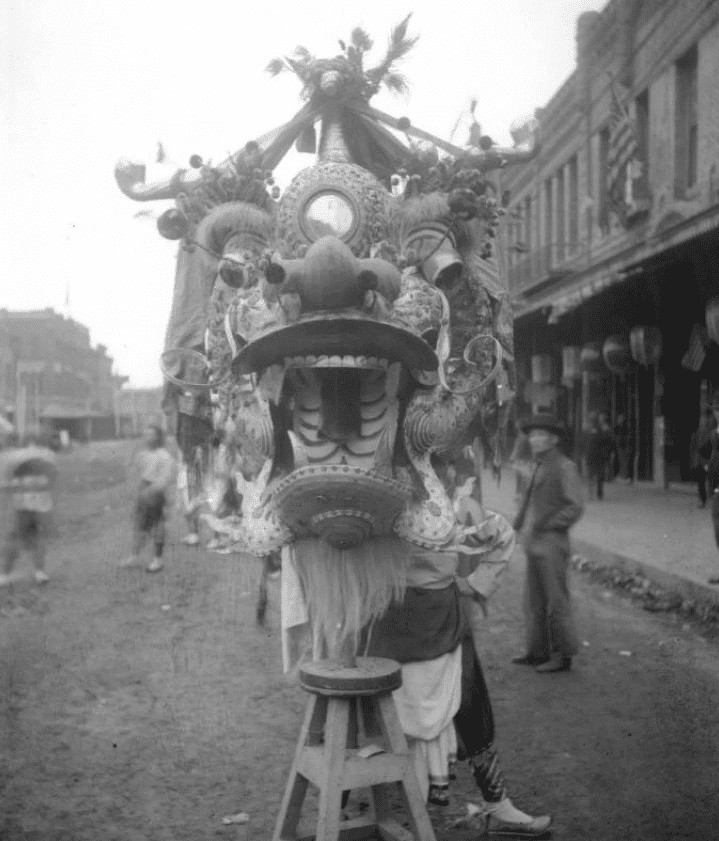
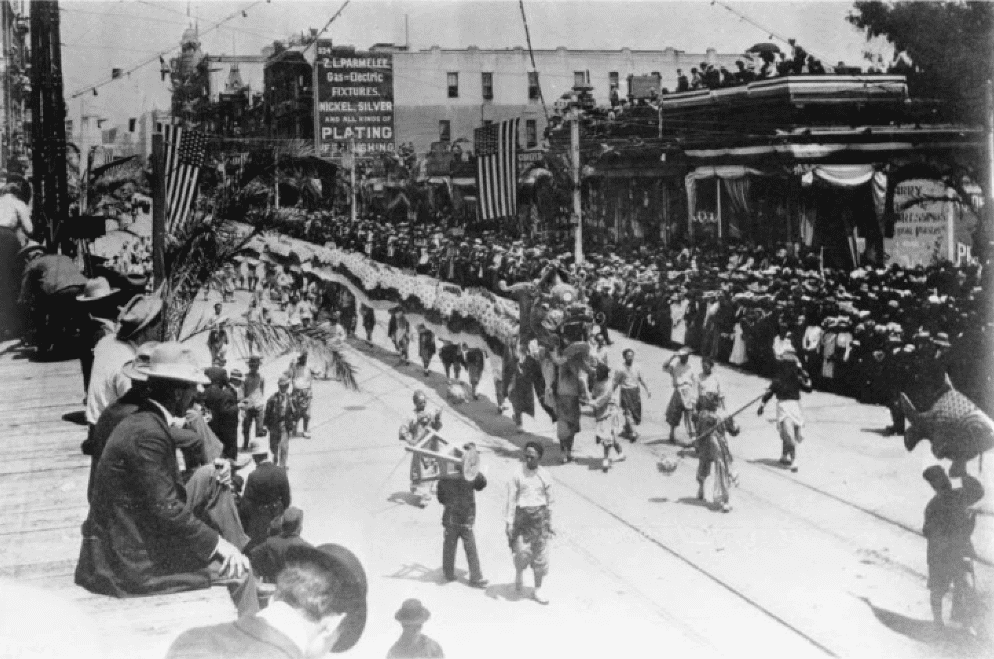
A photograph of a long dragon standing in the middle of a street during the La Fiesta de Los Angeles parade (original title) is preserved in the California Historical Society and University of Southern California libraries. The photo was taken back in 1901. However, the event had a much longer history. This is exactly what los-angeles.pro tells you more about.
The city’s oldest parade and its history
The parade in Chinatown is one of the oldest events in the city. Modern townspeople are familiar with the event that occurs every New Year according to the lunar calendar. During this period, locals and tourists do their best to see dragon dancers, famous marshals and Miss Chinatown. However, it was not always like that. Thus, it is interesting to learn more about the history of the parade.
The previous name of the event is Fiesta de Los Angeles. The parade was not originally held on the Lunar New Year and was not organized by the Chinese. These facts can surprise the townspeople. In 1894, the developers were considering various options to best advertise Los Angeles from a position of generosity and progress.
Another reason for holding the parade was to restore the image of Los Angeles, which was tarnished by the terrible event.
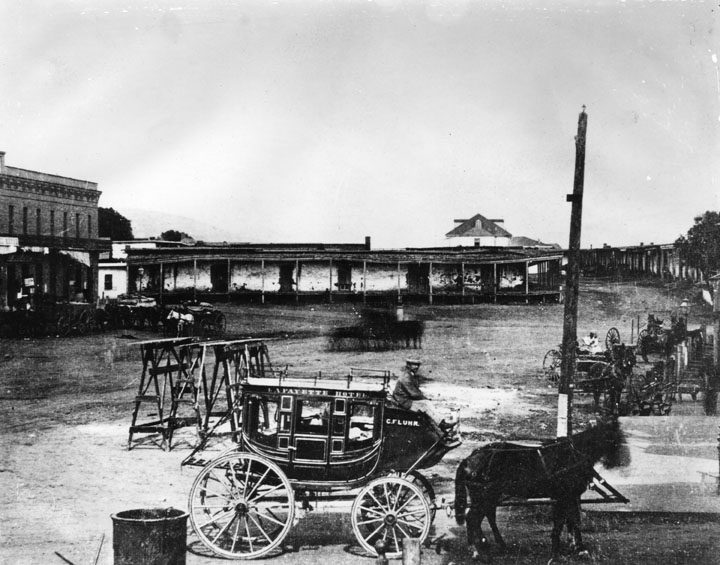
A dark page of the city’s history
This event is also known as the Chinese massacre of 1871. May has been Asian American and Pacific Islanders Heritage Month ever since. During this month, it is customary to honor the culture and traditions, history and achievements of Asian Americans. It is worth going back in time to talk about the prerequisites for organizing the parade.
The 1870 census indicated that Los Angeles had a population of about 172 Chinese, which was about 3% of the total population. From the 1850s to the 1860s, attacks on the Chinese were already recorded but the press coverage was neutral. In 1869, the policy of the local mass media changed. Instead of a tolerant attitude, the townspeople began to read articles condemning and criticizing Chinese immigration. Editorials described the Chinese as immoral and inferior. The number of attacks on them increased.
The greatest tension was felt in October 1871 in Chinatown. The abduction of the young Chinese woman only intensified the animosity between the leaders of the two rival associations of mutual benefit. A firefight broke out between several Chinese. Two police officers tried to stop it. One of them was injured and a civilian who was helping the police was killed. The civilian was Robert Thompson, a popular former owner of a local saloon.
This sparked a riot that quickly grew to 500 people. It was a time of brutality. The rebels drove out the Chinese and dragged the prisoners to makeshift gallows. The murder of 18 Chinese, one of them was the respected Dr. Jin Tong, was terrible proof of the events.
This story is a tragedy also because no one was punished. This did not lead to racial tolerance and anti-Chinese sentiments steadily grew in the following years. Newspapers all over the world covered the event.
Some parade organizers decided to demonstrate multiculturalism by inviting Chinese immigrants to participate in it.
The Chinese community in Los Angeles
The Chinese community suffered from discrimination and sought to improve its social status for decades. Eugene Moy of the Chinese Historical Society of Southern California explained why it was so important to be a part of the parade. People didn’t just march with dragons and lions in historical costumes. They also shared their history and cultural heritage.
However, not all parade organizers wanted to see the Chinese community at the event. The holding of La Fiesta de Los Angeles was in question as anti-Chinese sentiment continued to grow in the city. Much of the anger was directed at the Chinese workers who had come to work on the San Fernando Tunnel and the Southern Pacific Railroad. Local men saw this as a potential threat. The response was the passage by Congress in 1882 of the Chinese Exclusion Act, which prohibited new Chinese workers from entering the United States. Chinese who already lived on the territory of the country could not become its citizens. Local authorities passed a series of laws that prohibited Chinese from owning property.
Despite all these difficulties and setbacks, Chinese immigrants managed to stay in the city. By 1890, the Chinese community had grown to 2,000 people.
Organization of La Fiesta de Los Angeles
Electrical equipment salesman Max Meyberg decided to head the organization of the event. Analyzing the research of historians, the purpose of the multi-day event was to announce the ambitions of Los Angeles in the 20th century.
The organizers could not come to a common decision. For some, the presence of representatives of the Chinese community meant failure and the risk of new riots. For others, it was about a chance to whitewash the city. After a long debate, it was agreed to invite the Chinese to the event but only if other nations in the city were included, such as Mexico Native Americans.
Performance of the Chinese group
In downtown Los Angeles, bands, horse-drawn carriages and ceremonially dressed townspeople marched and rode down Hill, Broadway, Spring and May Streets on April 10, 1894. However, the real admiration was caused by the performance of the Chinese. This can be explained from several positions.
- Chinese culture was little known to most Los Angeles residents. Their bright costumes, unusual instruments and exotic dances became a novelty and interested the townspeople.
- Everything related to China was considered unusual and exotic for many people. It only strengthened the desire to see the performance of representatives of the Chinese community.
- The audience was left with an unforgettable impression by the high skill level of the Chinese in dance and music, their harmony and synchronicity.
- People were also attracted by the contrast of solemnly dressed Europeans and Americans on parade and Chinese in bright costumes.
The media also reflected admiration for the performance. One of the LA Times journalists noted that the performance of the Chinese community was a pleasant surprise for everyone.
The second parade
When planning the second La Fiesta de Los Angeles parade, the Chinese were mulling over participation, given the initial controversy. The organizers were well aware of how popular their first performance was. They visited Chinatown leaders and urged them to participate.
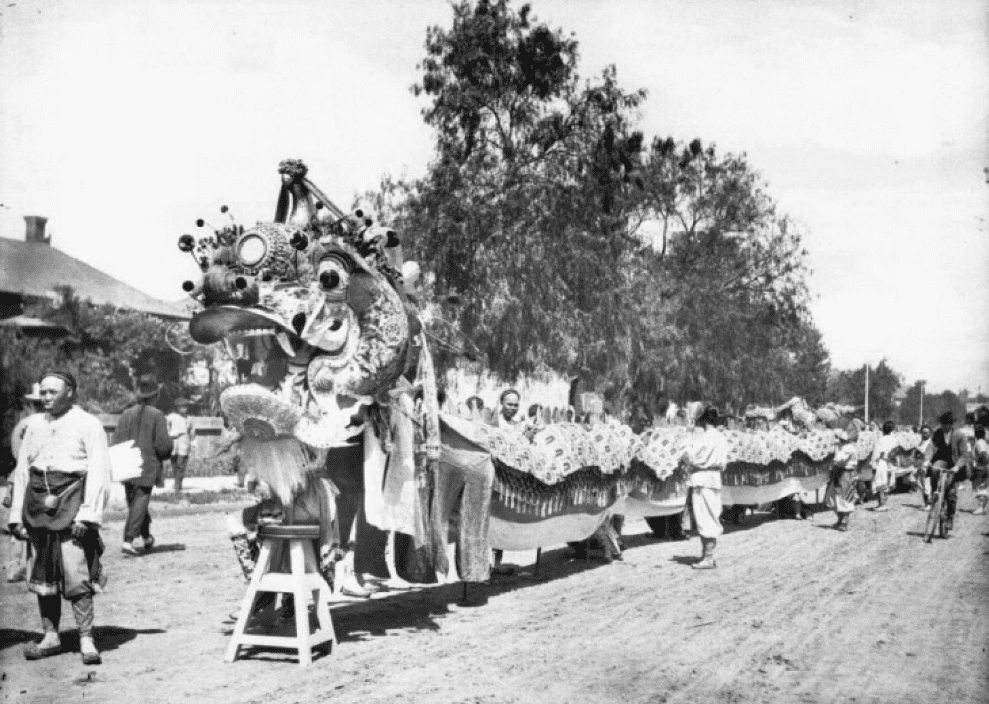
The mascot of the Chinese procession was a dragon, a symbol of good luck. The first dragon used in the parade was owned by the Chinese community in Marysville. In 1895, members of the Chinese community of Los Angeles purchased a new dragon brought from China at their own expense. This fact shows the pride and self-identification of the Chinese community in Los Angeles.
How did the parade change?
In 1901, the parade was renamed La Fiesta de Los Flores. The Chinese community continued to participate in the events. The parade was shut down in the 1940s. In the 1970s, it was reborn as the modern-day Fiesta Broadway, the city’s Cinquo de Mayo celebration.
The Lunar New Year Parade and the Mid-Autumn Festival in Chinatown became separate spectacles. Each of these events is covered in the press.
In the mid-1950s, the Chinese Chamber of Commerce was established and took over the responsibilities of planning the event.