

The Hollywood Walk of Fame stands as one of the most celebrated tourist attractions not just in Los Angeles, but across the entire United States. Every year, millions of visitors flock to Hollywood to see the legendary stars honoring actors, musicians, directors, TV and radio personalities, and other prominent figures from the entertainment world. Here is a closer look, brought to you by los-angeles.pro.
As a global symbol of show business, the Walk of Fame celebrates outstanding achievements in entertainment. Stretching along Hollywood Boulevard and Vine Street, it remains a must-see destination for anyone visiting California.
Where Is the Hollywood Walk of Fame Located?
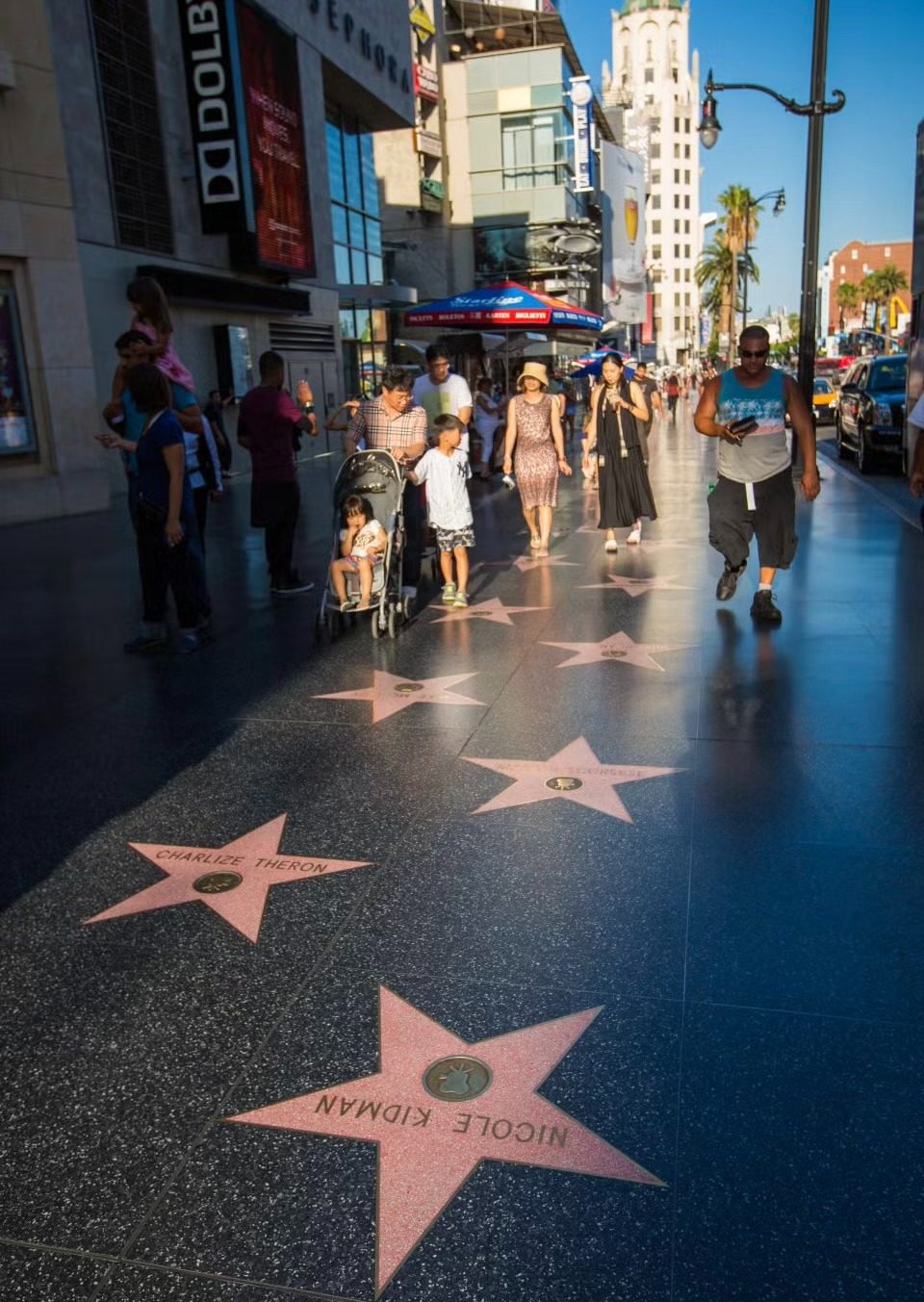
The Walk of Fame is located in the historic neighborhood of Hollywood in Los Angeles, California. It spans roughly 1.3 miles of Hollywood Boulevard, running from Gower Street to La Brea Avenue, plus an additional 0.4 miles on Vine Street between Yucca Street and Sunset Boulevard. Today, the Walk features more than 2,840 stars. Most are embedded directly into the sidewalk, spaced evenly apart. Each star is crafted from pink terrazzo and bordered with brass, bearing the honoree’s name.
For most tourists, the Hollywood Walk of Fame is a bucket-list stop during a trip to LA, right alongside Grauman’s Chinese Theatre, the Dolby Theatre, and the Griffith Observatory.
Visiting the Hollywood Walk of Fame is completely free and open 24/7. The easiest way to get there is by public transit—specifically the Los Angeles Metro Red Line (B Line). The closest stations are Hollywood/Highland and Hollywood/Vine, both located right along the main stretch. If you plan to drive, keep in mind that parking in Hollywood is paid, and finding an open spot on weekends or holidays can be a real hassle. Many visitors opt for the underground parking structure at the Ovation Hollywood shopping and entertainment complex, which offers direct access to the Walk of Fame.
To find your favorite celebrity’s star quickly, it helps to use the official “Find a Star” online directory, which provides exact locations for every honoree. This is a massive time-saver, considering the Walk stretches for well over a mile.
The best time to visit is in the morning, when crowds are thin and it is much easier to snap photos without a sea of people in the background. Most travelers pair their stroll down the Walk of Fame with a visit to the Dolby Theatre, the Chinese Theatre, and the viewing deck at Ovation Hollywood, which offers a fantastic view of the world-famous Hollywood Sign.
The History Behind the Walk of Fame
The concept for the Walk of Fame was first dreamed up in 1953. At the time, Hollywood was facing economic struggles due to urban sprawl and the meteoric rise of television. Looking for a way to revitalize the area and highlight its cultural significance, the Hollywood Chamber of Commerce came up with a brilliant solution.
The initial designs for the landmark were proposed in the mid-1950s. While various styles were considered, organizers ultimately agreed on the iconic five-pointed star set against a dark background.
The first prototype stars were installed in 1958, and the project officially opened in 1960. Film producer Stanley Kramer became the very first honoree to have a permanent star installed as part of the completed project. At launch, the Walk of Fame featured more than 1,500 names. Since then, the roster of stars has steadily grown.
Decoding the Stars: What Do the Symbols Mean?
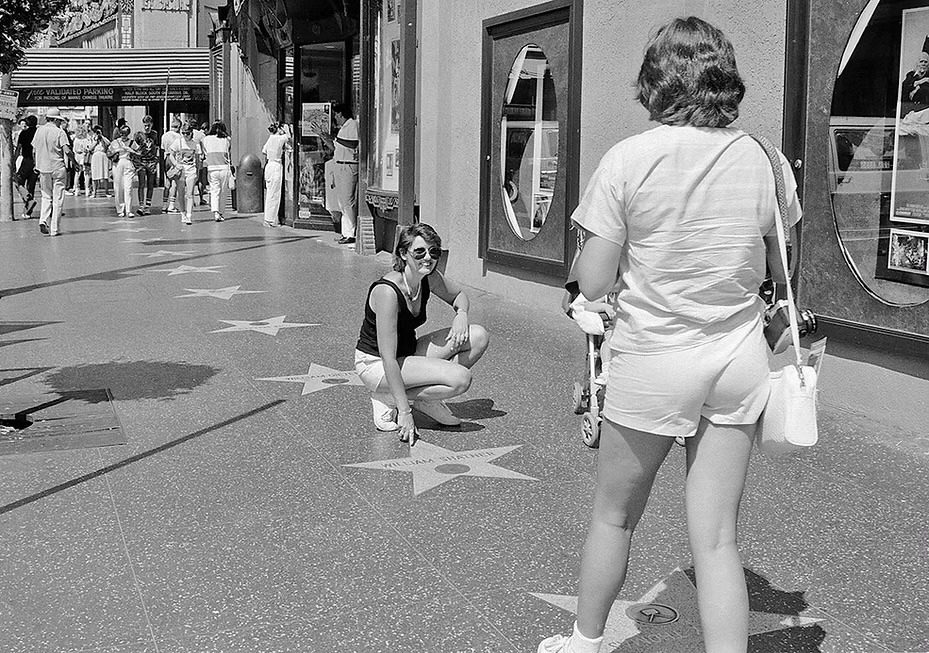
While every star features the same classic look, each one includes a specific emblem representing the category of achievement. The core categories include:
- Motion Pictures;
- Television;
- Recording/Music Industry;
- Radio;
- Live Theatre/Performance;
- Sports Entertainment.
Sports Entertainment was officially introduced as a brand-new category in 2023. Beyond traditional stars, the Walk of Fame also features unique commemorative plaques. Among the most famous are the round Apollo 11 moon landing monuments, located at the intersection of Hollywood Boulevard and Vine Street.

How to Get a Star on the Hollywood Walk of Fame
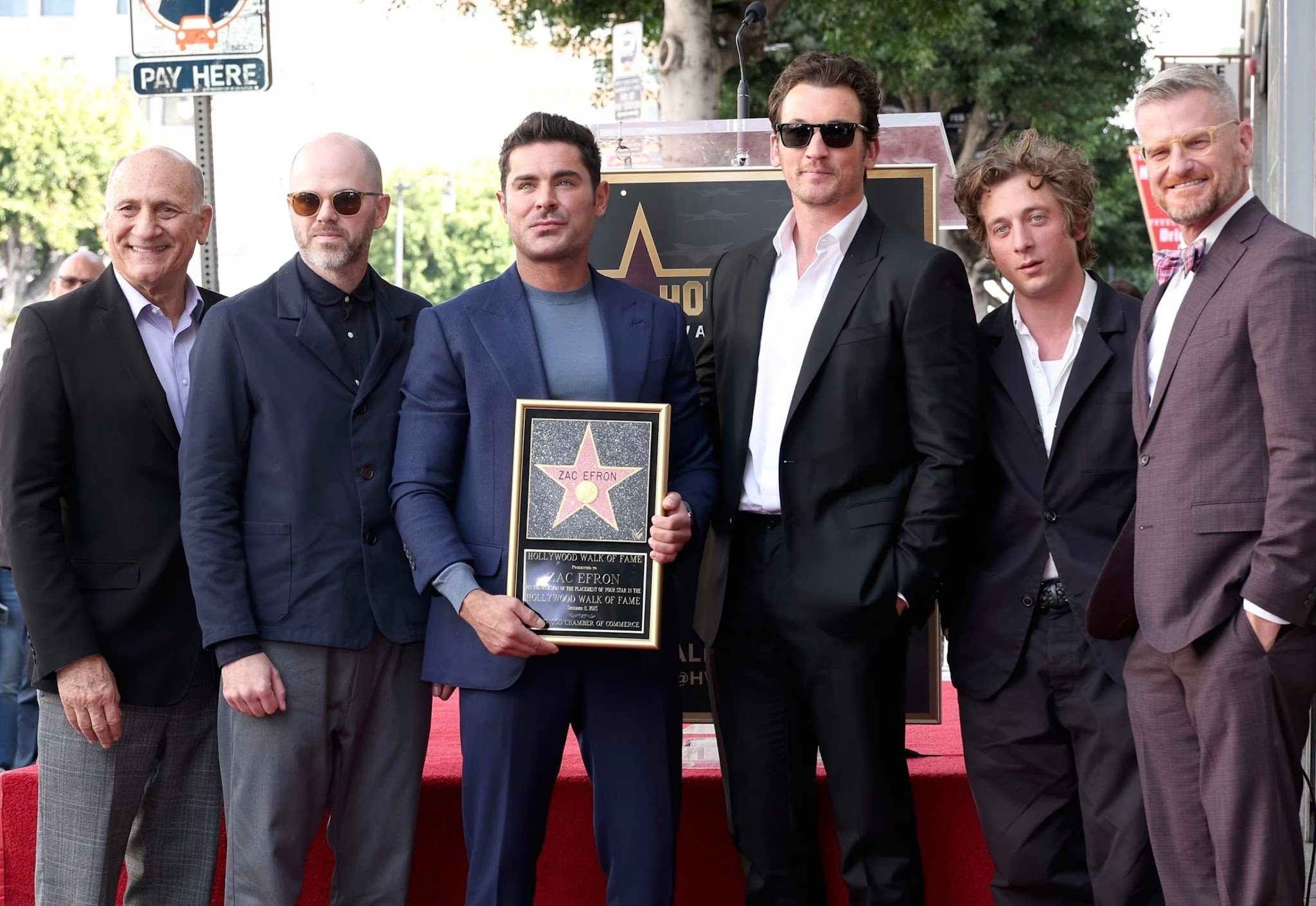
Landing a star on the Hollywood Walk of Fame is no easy feat. While anyone can submit a nomination, the process requires written consent from the celebrity or their management. The Hollywood Chamber of Commerce fields between 200 and 300 nominations annually, but the selection committee only approves around 30 candidates per year.
To be considered, nominees must meet several strict criteria:
- At least five years of professional experience in their field;
- Significant contributions to the entertainment industry;
- A proven track record of philanthropic or charitable work;
- A formal agreement to attend the star unveiling ceremony in person.
For posthumous honors, a minimum of two years must have passed since the candidate’s death.
A common misconception is that celebrities simply buy their way onto the Walk of Fame. In reality, the nomination fee is paid by a sponsor—such as a movie studio, television network, record label, or even a dedicated fan club. As of 2026, the official sponsorship fee stands at $85,000. Part of this money goes toward creating and installing the physical star, while the rest is funneled into a trust for the long-term maintenance and restoration of the entire Walk of Fame.

The Most Famous Stars on the Walk
Out of thousands of names, a few global icons draw the biggest crowds. Marilyn Monroe’s star is incredibly popular, nearly always surrounded by tourists snapping photos. Stars dedicated to Michael Jackson, Elvis Presley, Charlie Chaplin, Frank Sinatra, Walt Disney, Steven Spielberg, and Tom Hanks remain massive draws, celebrating true icons of American culture. Major crowds also gather whenever a new star is unveiled, with some ceremonies attracting thousands of die-hard fans.
Gene Autry holds a legendary status in the landmark’s history as the only person to receive stars in all five original categories—a unique achievement that has never been matched. Several other stars, including Frank Sinatra, Bob Hope, Mickey Rooney, and Roy Rogers, have multiple stars to their names. In some cases, musical groups are honored both with a collective band star and individual stars for each member, which was the case for the legendary British band The Beatles.
Interestingly, the Walk of Fame isn’t reserved just for real people; it also immortalizes icons of pop culture. Mickey Mouse, Minnie Mouse, Bugs Bunny, Batman, Kermit the Frog, and Snoopy all have their own stars. Mickey Mouse made history in 1978 as the first fictional character to receive a star, timed to celebrate his 50th anniversary.
One of the most unusual sights is Muhammad Ali’s star, which is installed vertically on a wall rather than on the sidewalk. This adjustment was made at the legendary boxer’s request, as he did not want people stepping on his name. Visitors might also notice two different stars for Michael Jackson—one belongs to the King of Pop, while the other honors a well-known American radio host with the same name.
Over the decades, a handful of stars have been stolen or vandalized, including those belonging to James Stewart, Gregory Peck, and Kirk Douglas. In 2010, a time capsule was buried beneath the Walk of Fame, scheduled to be opened in 2060. It contains a variety of mementos tied to the rich history of Hollywood and the American entertainment industry.
Preserving a Legend: Restoration Efforts
Despite its global fame, the Hollywood Walk of Fame requires constant upkeep. In 2008, a massive restoration initiative was launched to evaluate the condition of every star, identifying hundreds that needed repairs or total replacement.
Restoring a single star can cost thousands of dollars. These efforts are primarily funded by the fees collected from new nominees and sponsors. In addition to these major restorations, the Walk is regularly cleaned and polished to keep it looking pristine for the millions of tourists who visit each year.