

Today, Renaissance festivals are a staple of American cultural life. Every year, millions of people flock to these massive events to enjoy jousting tournaments, theatrical performances, historical reenactments, and artisan workshops. Yet, few realize that modern Ren Faire culture actually traces its roots back to California. Read more at los-angeles.pro.
The Renaissance Pleasure Faire of Southern California is widely recognized as the very first festival of its kind in the United States. It sparked a nationwide trend of historical fairs that eventually spread across the country and even gained popularity abroad. Held every spring at the Santa Fe Dam Recreation Area in Irwindale, California, the Renaissance Pleasure Faire draws thousands of visitors eager to step back in time into 16th-century England.
How the Renaissance Pleasure Faire Concept Was Born
The festival’s history dates back to 1963, founded by Ron and Phyllis Patterson—a married couple working in education and the arts. Phyllis Patterson, a passionate educator and theater director, was the driving force behind the project. She wanted to bring history to life and make it accessible to everyone. While working with her students, she fell in love with the idea of taking Renaissance theater out of the classroom. She envisioned an environment where people wouldn’t just watch a performance but actively participate in it. The concept was heavily inspired by the Italian Commedia dell’arte tradition, a popular style of Renaissance street theater. These interactive performances laid the groundwork for a massive, immersive festival.
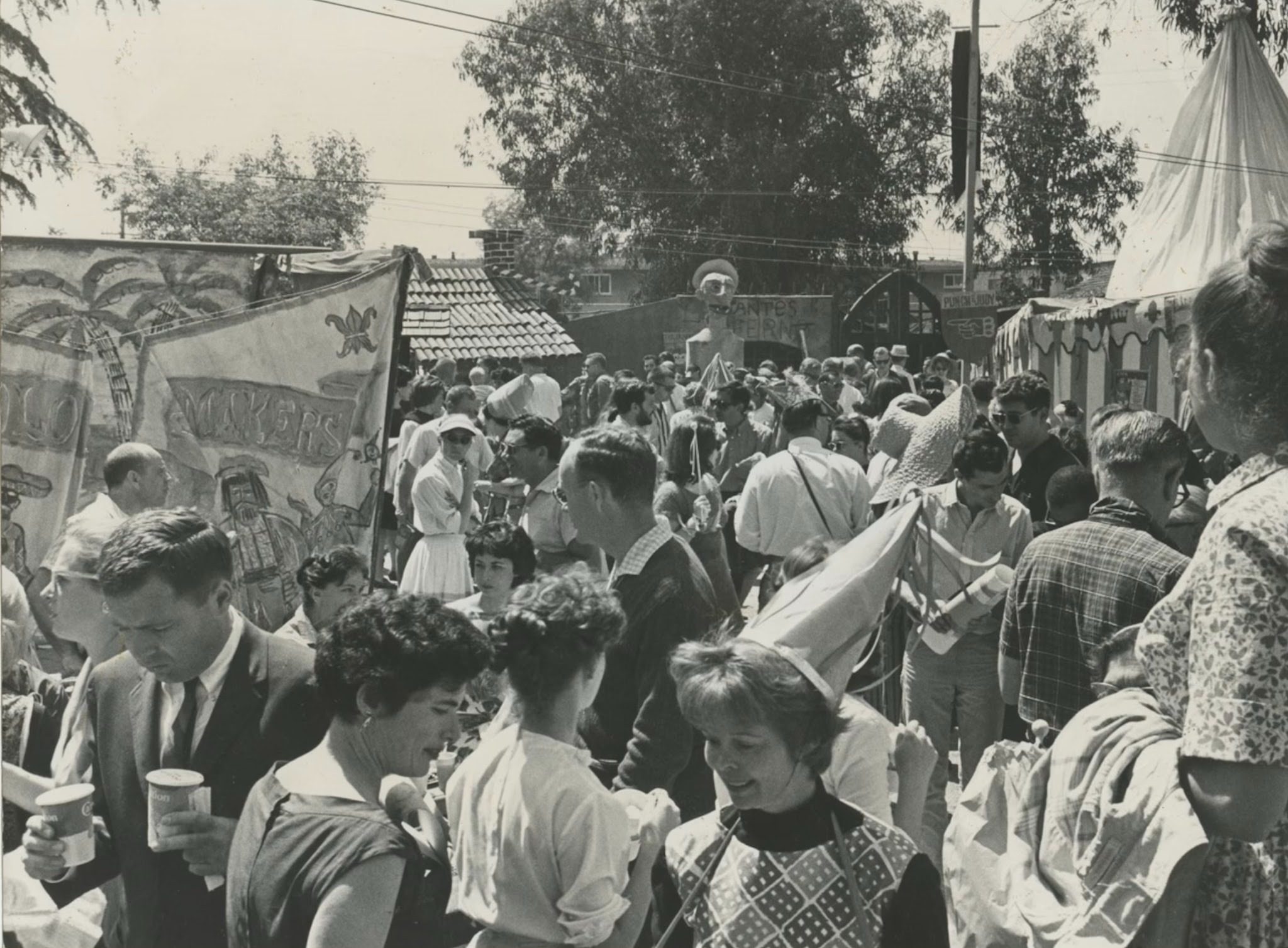
The inaugural Renaissance Pleasure Faire opened its gates in May 1963 in Agoura Hills, California. Originally organized as a fundraiser for KPFK-FM, a progressive local radio station, the event lasted only a single weekend. Despite its short run, it was an instant hit, setting the stage for an entire cultural movement.
The birth of the Renaissance Pleasure Faire coincided with a time of profound social change in the United States. In the early 1960s, many artists, musicians, and creatives were looking for alternatives to the rigid social norms of postwar America. As a result, the festival quickly turned into a hub for artists, actors, craftsmen, and anyone seeking creative freedom. Los Angeles’ vibrant cultural scene profoundly shaped the event’s atmosphere. Dozens of volunteers stepped up to build sets, sew costumes, sew flags, and craft theatrical masks. Ultimately, the Renaissance Pleasure Faire became much more than a historical reenactment. It evolved into a massive artistic experiment that seamlessly blended theater, history, education, and crowd interaction.
Why Is It Called the Renaissance Pleasure Faire?
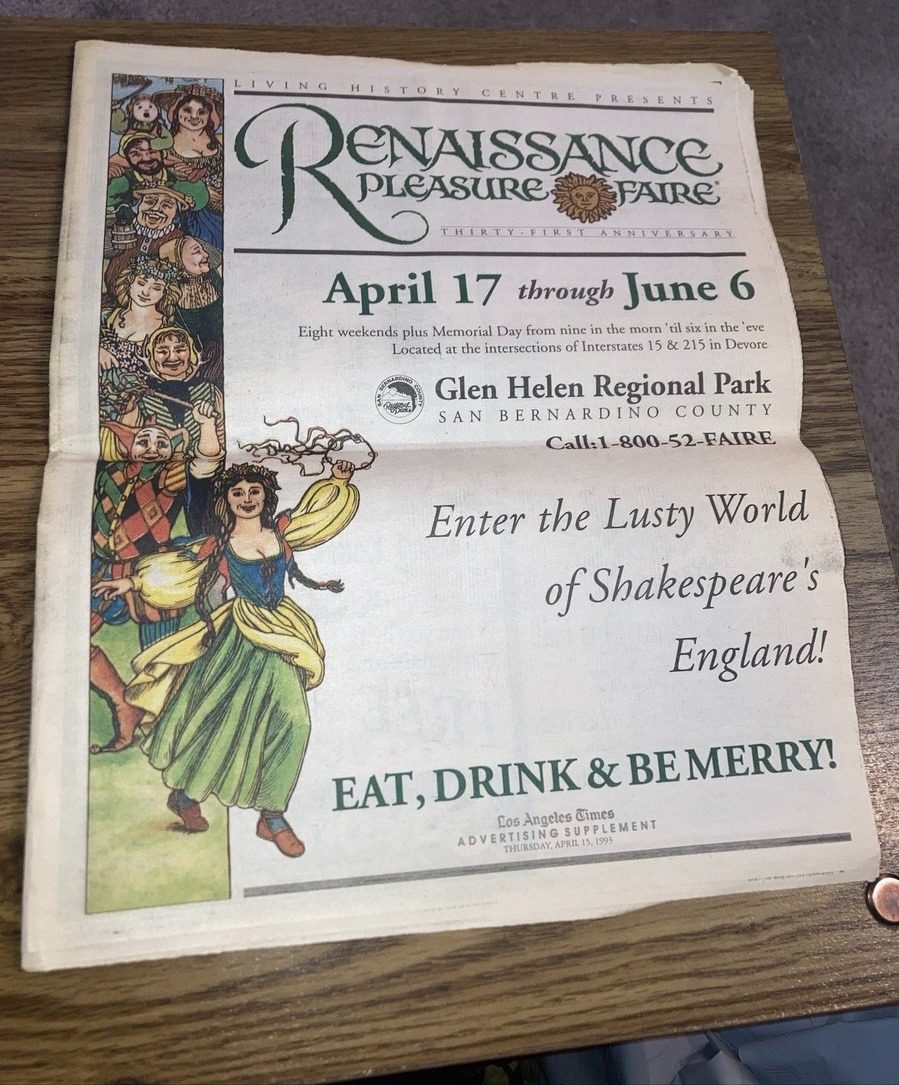
The origin of the name itself is quite fascinating. The founders wanted to capture the feel of Old England, so they looked into historical spellings of the word “fair.” In the 16th century, it was often spelled “fayre.” However, the creators decided to tweak it slightly for modern audiences, choosing the spelling “faire.” This choice eventually caught on, becoming the standard term for similar festivals across the United States. In essence, the Renaissance Pleasure Faire did not just pioneer a new cultural format—it actually shaped the vocabulary we use today.
The Founding of the Living History Centre
As the event’s popularity skyrocketed, the founders established the Living History Centre in 1968. This non-profit organization was tasked with preserving the festival’s educational core and advancing historical reenactment techniques. The center helped share the Faire’s blueprint, supporting theatrical programs and educational initiatives. Thanks to these efforts, the historical festival concept quickly spread to other states. Soon, new Renaissance fairs began popping up all over the country, many of which still thrive today.
Over the years, the festival changed locations a few times. After its initial run in Agoura Hills, the Renaissance Pleasure Faire moved to Glen Helen Regional Park in Devore, California, in 1989. In 2005, the festival found its permanent home at the Santa Fe Dam Recreation Area in Irwindale. This new, expansive venue allowed for larger sets, a bigger festival village, and room for even more visitors.
Bringing Elizabethan England to Life
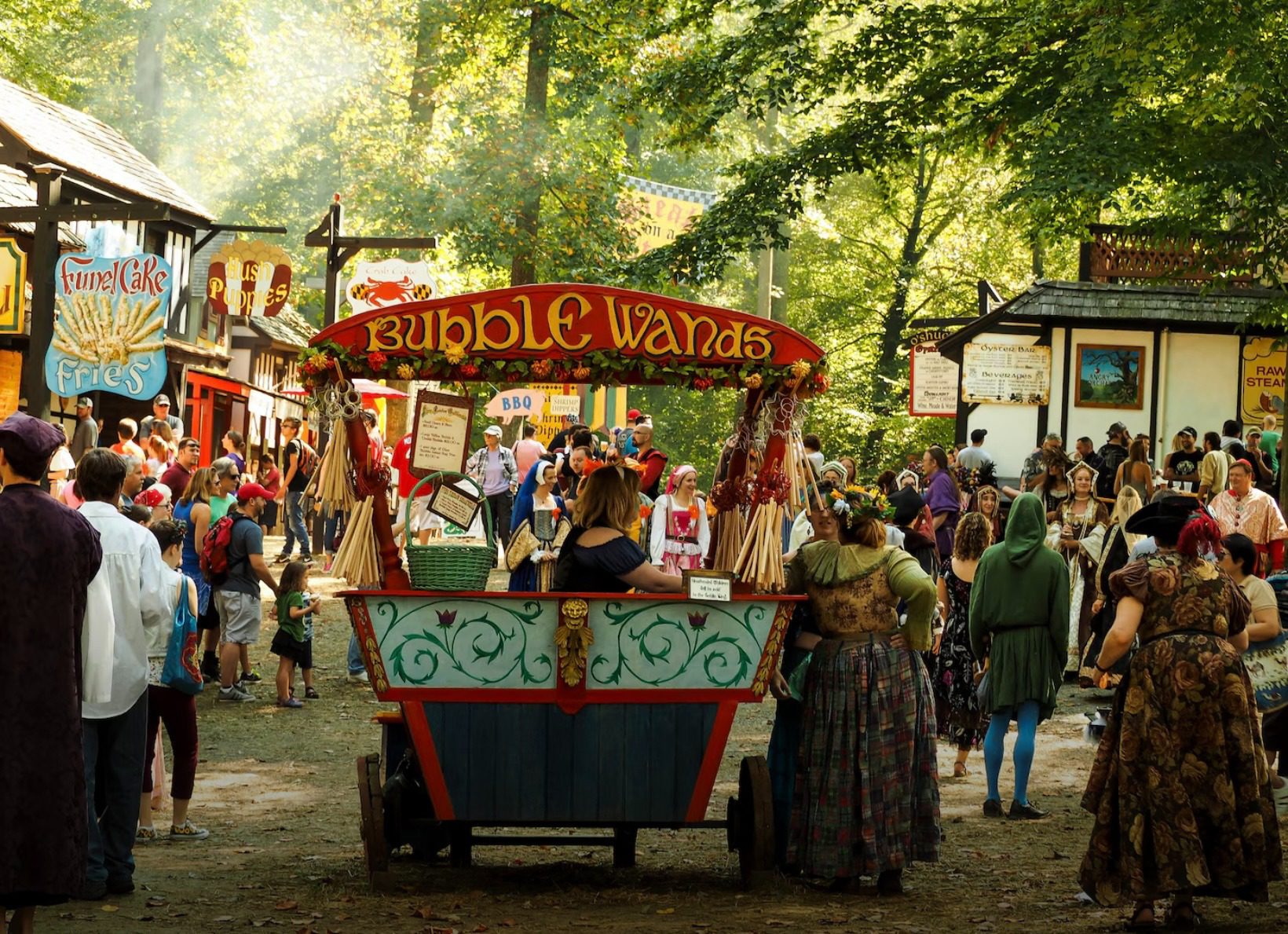
Historical accuracy is a cornerstone of the Renaissance Pleasure Faire experience. The festival centers around a fictional port town called Port Deptford, which meticulously recreates 1580s England during the reign of Queen Elizabeth I. Members of the official performance troupe wear historically accurate costumes. Before the season kicks off, every outfit undergoes a strict inspection to ensure it meets the required historical standards.
The festival brings together characters from all walks of Elizabethan life, including:
- yeomen;
- merchants;
- gentry;
- aristocrats;
- soldiers.
Visitors can also spot characters portraying Scottish highlanders, German landsknechts, Italians, Spaniards, and representatives of Middle Eastern cultures.
Guilds play an essential role in the life of the Renaissance Pleasure Faire. These guilds are dedicated groups of actors and performers who participate in the festival year after year. They portray a colorful cast of characters, including jesters, merchants, Puritans, travelers, inventors, and more.
Unlike traditional theater, which keeps a strict boundary between the stage and the audience, the Renaissance Pleasure Faire offers total immersion. Visitors can chat with characters, join in on street scenes, and even influence how side-plots unfold. This interactive element is a major reason why the festival remains so wildly popular.
Through the decades, the Renaissance Pleasure Faire has evolved into a major catalyst for costuming culture in the U.S. While strict historical accuracy isn’t mandatory for guests, the organizers strongly encourage dressing up. Modern themed weekends now cater to pirates, heroes and villains, fantasy characters, and even time travelers. This inclusivity has turned the festival into a major hub for cosplay, role-playing, and creative self-expression.
An Enduring Impact on American Culture
The legacy of the Renaissance Pleasure Faire stretches far beyond a single event.
It played a vital role in reviving traditional heritage crafts, such as:
- blacksmithing;
- leatherworking;
- glassblowing;
- historical costuming;
- arts and crafts.
An entire industry of artisans, crafters, and performers has grown around the festival circuit. Thanks to the Renaissance Pleasure Faire, historical fairs have firmly cemented themselves as one of America’s favorite cultural pastimes.
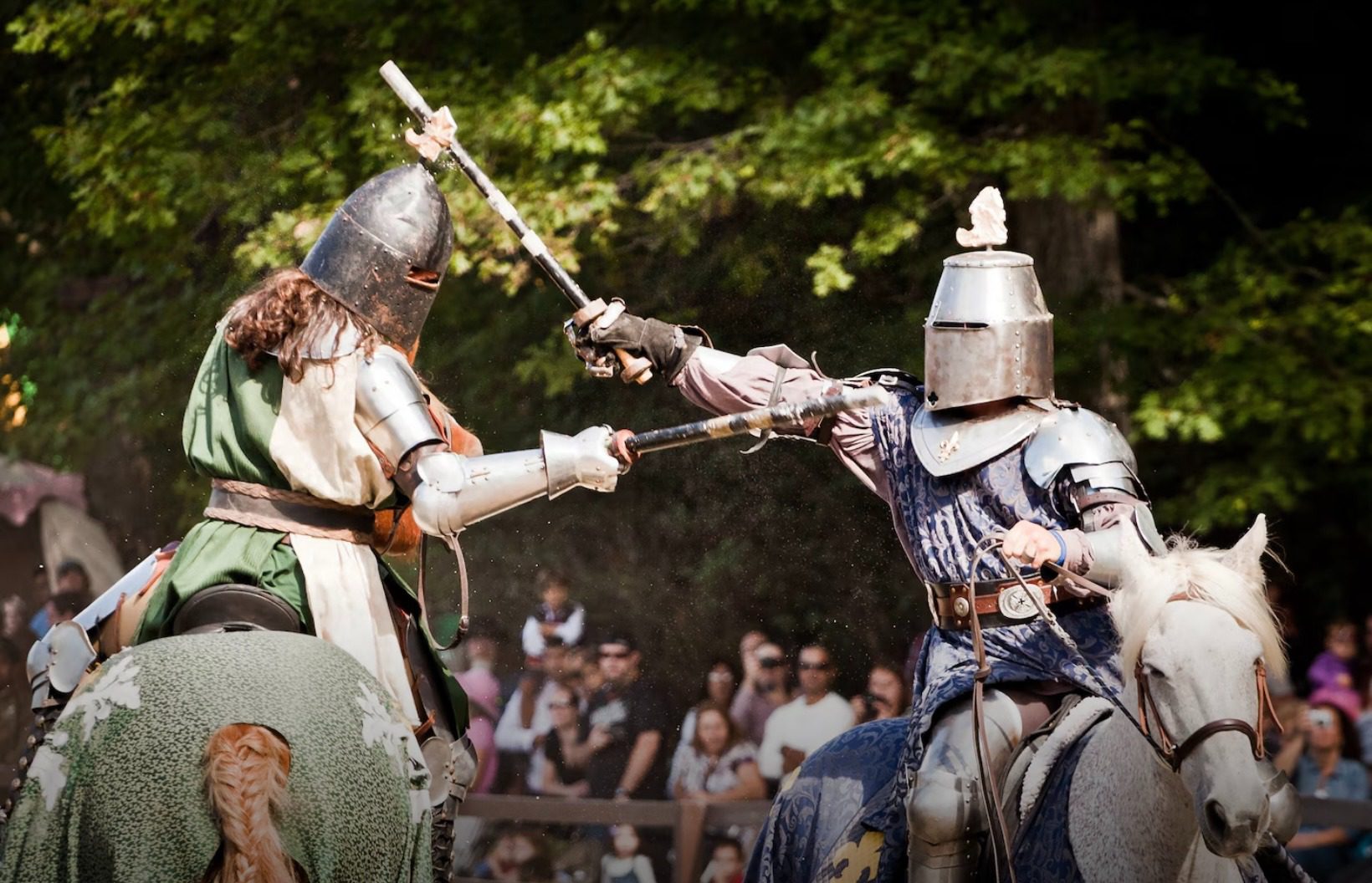
Like many major public events, the festival faced setbacks due to the COVID-19 pandemic, forcing a hiatus in 2020 and 2021. After a two-year break, the Renaissance Pleasure Faire made a triumphant return in April 2022, welcoming eager crowds once again. This successful comeback proved that even in the digital age, the magic of the Renaissance fair remains as strong as ever.