

The Olympic Arts Festival is an opportunity to see many of the world’s best artists in one place at the same time. This is a tour through the cultural capitals of the world, such as Paris, London, Los Angeles, Milan, Tokyo, Beijing, New York and São Paulo, which does not require a foreign passport. The festival offers an opportunity to see performances and art never before seen in America, including impressionist masterpieces from the Louvre, national treasures from Japan’s Kasuga Shrine and Germany’s Pina Bausch Dance Theatre Company. Read more on los-angeles.pro.
The best theater companies in the United States prepared new productions and world premieres from Boston and New York, San Francisco, Chicago and Washington. America’s best dancers, along with outstanding counterparts from Africa, Asia and Europe, made Los Angeles the dance capital of the world in the summer of 1984. The Olympic Arts Festival included festivals of tap dance, modern music, masks, film, animation, video and folk life, as well as four evenings of the Hollywood Bowl: from a jazz marathon to a gala concert with Michael Tilson Thomas and the Los Angeles Philharmonic. A total of over 400 performances, exhibitions and special events were held. Learn about the Los Angeles Coliseum, a unique stadium with a 100-year history.
Creating a festival
The Olympic Arts Festival began with a Greek verb and a promise. The verb ‘thaumadzo’ means to be enthralled, surprised, to feel awe, wonder and enjoy the discovery. The purpose of the festival was to evoke the spirit of Ancient Greece, where athletes and artists gathered at the Olympic Games to compete in sports, perform new plays and celebrate the joy of life.
At the 1984 Summer Olympics, it was decided to honour this tradition by creating a 10-week festival, part of which preceded the Games. It was very international, especially reflecting the nature of the Games and the city of Los Angeles, where more than 83 languages and cultures coexisted successfully. After all, Los Angeles is located between Europe and New York. Tokyo, Seoul and Beijing are as influential here as Boston, Paris and Milan. It’s the same story with cultural traditions that combine with the city’s openness to the new and untested to create a unique atmosphere. Unlike European festival cities, Los Angeles does not have a large public attraction that catches attention and would become the basis for holding the festival. The topography and climate of the city determined its character. Its disparate elements, sprawl, multiple cultures, mountain, beach and desert microclimates contribute to the city’s central paradox. Its identity lies in its diversity. Therefore, the first step in making Los Angeles a festival city was to rethink the very idea of a festival. Thus, there are strong parallels between the organization of the festival and the organization of the 1984 Olympic Games.
Who took part in the first festival?
The solution was to build on what Los Angeles has to offer rather than bemoan what it lacks. The Los Angeles Olympic Organizing Committee turned to the city’s vibrant arts community to enlist the support of its museums and galleries, theaters and dance companies, cultural and community centres. These organizations became co-organizers of the festival and played an important role in its planning and implementation.
From 99-seat theaters to the Rose Bowl, from intimate galleries to large museums, the scale and type of venue varied, as well as the nature of the festival experience. On any given day, a few hundred visitors might pass through the Municipal Gallery to see Art in Clay, while hundreds of thousands of drivers saw the murals painted along the highway.
The preparation began with the countries that previously hosted the Olympic Games. Each had to send a performance group or exhibition to Los Angeles. The festival organizers also decided to invite performing arts companies from Africa and South America as representatives of these large continents. The People’s Republic of China was invited to mark China’s first appearance at the Olympics since 1932. The Republic of Korea, which hosted the 1988 Summer Games, sent the National Dance Company.
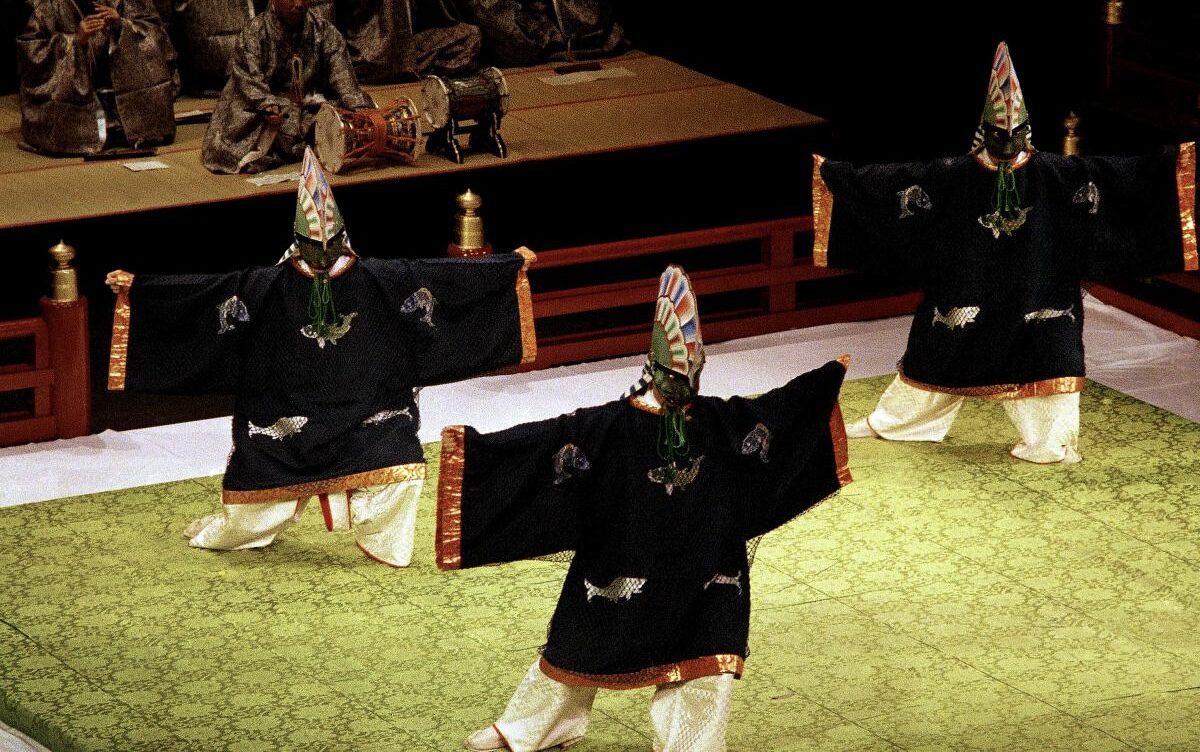
Artists and governments responded with extraordinary generosity. In Nara, Japan, the head priest of Kasuga Shrine opened antique wooden chests to display Bugaku masks from the 15th and 16th centuries.
Difficulties in the organization
Not everything in the creation of the Olympic Arts Festival was simple. Many logistical problems arose. It was a large-scale festival. The organization included caring and catering for 1,500 artists from all over the world, working out contractual details in many languages and planning about 400 events within the available space and time. Delivery of 500-year-old Bugaku masks and 45 Impressionist masterpieces from the Louvre, as well as three grand operas from Covent Garden, including elaborate sets and large casts was a daunting task. Creating the festival required four years, 300,000 miles of travel and negotiating 130 contracts with 18 countries. This involved discussing many details with artistic directors, company heads and curators, as well as negotiations with ambassadors, ministers of culture and heads of state. However, ways were found and logistical problems were solved.
The main background of the event was that art is not a form of propaganda, but an instrument of truth, an opportunity to put aside differences and enjoy life. The festival did not seek to preach or dictate a hierarchy of taste. Participating countries agreed to this. Governments that might have preferred more traditional representatives of their cultures respected the artistic integrity and provided significant support to artists with an unconventional vision. Not that the festival ignored more traditional artists or works. It was open to the unconventional and offered numerous opportunities to explore new avenues in art.
Festival’s heritage
It was also important that the festival leave a visible legacy to the people of Los Angeles, just as the bronze and marble statues of sports heroes are part of the legacy of the ancient Olympic Games. Thus, the Los Angeles Olympic Organizing Committee commissioned several works, such as the bronze gate located in the Los Angeles Memorial Coliseum in Exposition Park. In addition, a 25-foot airlock was installed in LA, supporting the bare torsos of one male athlete and one female athlete. On the sides of the pillars of the gateway, the basic reliefs of athletes in motion are depicted.
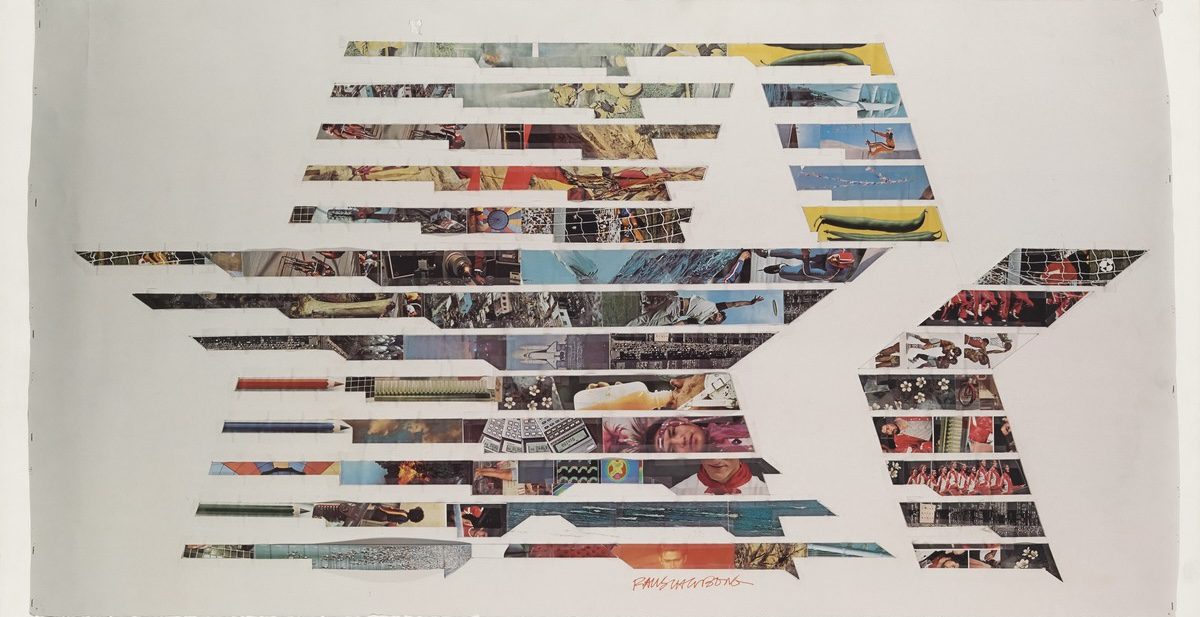
Another legacy is the Olympic Mural Project. Ten major Los Angeles muralists were invited to decorate the freeways between downtown Los Angeles and the Coliseum with their creations. Their works vary in style and content, from the abstract to the real and even surreal.
The Olympic Arts Festival is a process involving artists and athletes, directors and diplomats, representatives of many aspects of world culture. This was an opportunity to gain new experience for 1,500 artists.
Source:
- https://digital.la84.org/digital/api/collection/p17103coll1/id/32136/download
- https://www.theatre-du-soleil.fr/public_data/download/event/1602776234/programme-los_angeles.pdf
- https://online.ucpress.edu/afterimage/article-abstract/11/9/3/123150/It-s-How-You-Play-The-GameThe-1984-Los-Angeles?redirectedFrom=PDF