

Mickey Cohen’s story is the classic American gangster tale: from a small-time criminal and boxer in Chicago, he rose to become the undisputed mob boss who held all of Los Angeles in his grip. Learn more about one of the most notorious and influential figures in mid-20th-century American crime on los-angeles.pro.
Early Life
Meyer Harris “Mickey” Cohen was born in New York on September 4, 1913, to a Jewish family. His parents had immigrated to the U.S. from Kyiv, Ukraine. After spending his early years in New York, his family moved to the Boyle Heights neighborhood of Los Angeles. Cohen started making money at a young age, selling and delivering newspapers on the street.
By the age of nine, in 1922, he was sent to a reformatory for minor offenses, such as petty theft. Back then, reform schools were an alternative to adult prison for kids convicted of crimes.
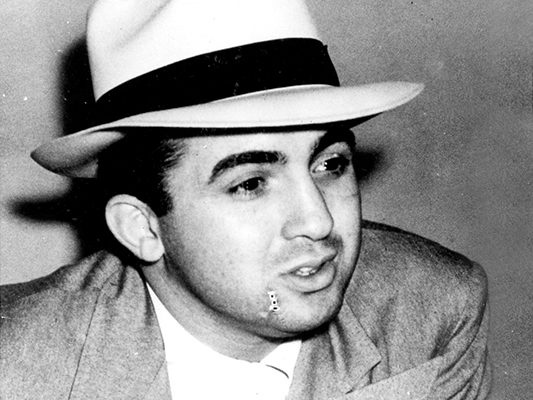
Boxing: A Stepping Stone
As a teenager, Cohen got into boxing. He started by participating in illegal prize fights around Los Angeles. In 1929, he moved to Cleveland to train as a professional boxer. The locals knew him as “Irish Mickey Cohen,” and his first professional fight in Cleveland took place on April 8, 1930. He had many more bouts, but one stands out as the reason he earned the nickname “Gangster Mickey Cohen.” On June 12, 1931, Cohen fought and lost to Tommy Paul, the world featherweight champion from Buffalo, New York, after being knocked out just 2 minutes and 20 seconds into the first round.
Cohen’s boxing career ended with a fight on May 14, 1933, against Alberto “Baby” Arizmendi in Tijuana, Mexico. His final record was 8 wins (2 by knockout), 8 losses (4 by knockout), and 5 draws.
Rise to Power
While in Cleveland, Cohen met Louis Rothkopf, a well-known American businessman and criminal associate of gangster Morris “Barney” Dalitz. Rothkopf, who was called “Mr. Las Vegas” because of his casino ownership and business dealings, was a key figure. Cohen later moved to New York, where he became an associate of Johnny Dio, a mobster and brother of racketeer Giovanni Ignazio Dioguardi. During Prohibition, Cohen relocated to Chicago and joined organized crime, even having a brief encounter with Al Capone. A disagreement with a gambler forced him to flee Chicago, and he returned to Cleveland to work for Lou Rothkopf, an associate of Meyer Lansky and Benjamin “Bugsy” Siegel. From there, Cohen made his way to Los Angeles, where plenty of work awaited him.
In 1939, he arrived in Los Angeles to work for Benjamin “Bugsy” Siegel, who was the boss of the National Crime Syndicate at the time.
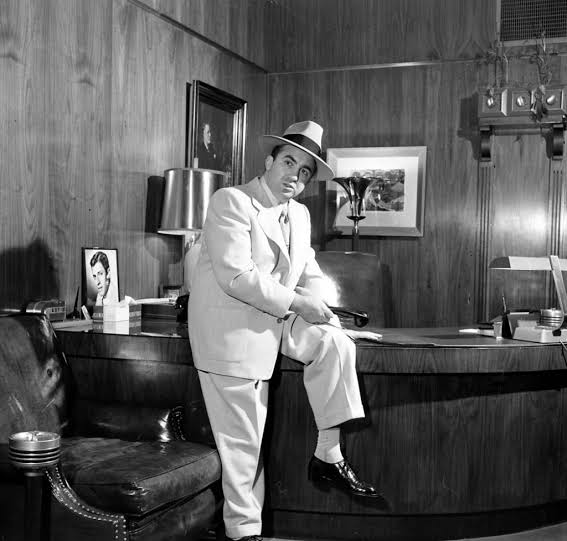
The Mafia King
Siegel was a pioneer in developing the then-untapped Las Vegas, but his failure to follow mob rules led to his assassination by a sniper in his Beverly Hills living room in 1947. After Siegel’s death, Cohen became the top figure in Los Angeles’s organized crime scene, competing with rival mob leader Jack Dragna.
Cohen was backed by the Mafia “royalty” and his lucrative plan for total control included a newspaper to spread his own information and wiretaps to gather dirt on his rivals and partners. This was Cohen’s way of building an empire that combined criminal schemes with political influence and Hollywood glamor.
During this period, Cohen sought to polish his image. He hired a private tutor to teach him to read and write and took lessons on manners. This showed his ambition to fit in with high society and build connections with Hollywood A-listers. He was known to hobnob with celebrities like Frank Sinatra, Robert Mitchum, Dean Martin, Jerry Lewis, and Sammy Davis Jr., who were all familiar faces at the Grammy Awards ceremony in Los Angeles.
Interesting Facts
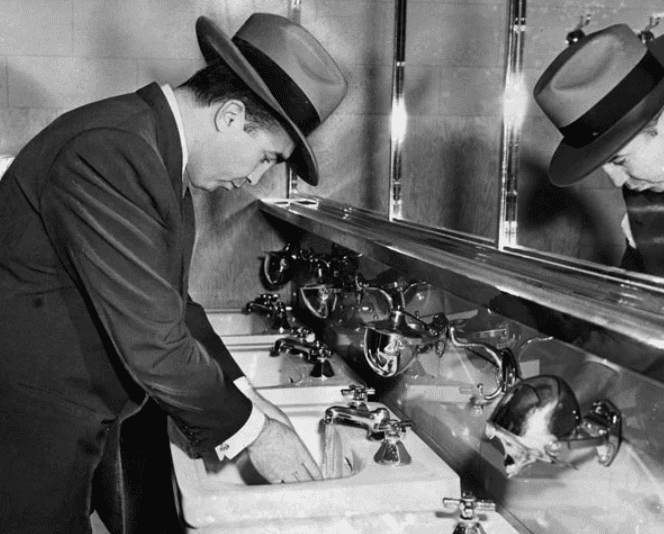
The Los Angeles Public Library has several photos that offer a closer look at Mickey Cohen’s life.
- The mob boss had an obsessive tendency to wash his hands, a habit often captured by newspaper photographers.
- In 1949, Cohen was shot in the shoulder near Sherry’s Cafe on the Sunset Strip. Given his risky profession, he drove a heavily armored Cadillac with bulletproof windows.
- In 1951, Cohen was convicted of tax evasion and sentenced to four years in prison. A decade later, he was convicted again on the same charge and sentenced to 11 years. While in prison, he survived an assassination attempt—just one of 11 attempts on his life throughout his criminal career.
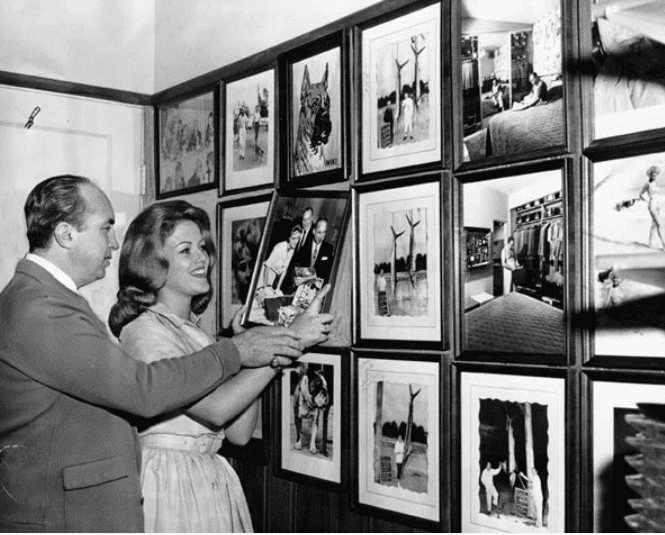
- A photo from 1962 shows Cohen with his fiancée, Claretta “Sandy” Hagen, at their Van Nuys home.
The Gangster’s Personal Life
From 1940 to 1958, Mickey Cohen was married to actress Lavonne. On February 6, 1950, a bomb exploded at their Brentwood home, but the couple survived.
He was also known to have had a relationship with actress Liz Renay, who served three years in prison for refusing to testify against him. He dated several famous burlesque dancers, including Tempest Storm, Candy Barr, and Beverly Hills. Photos from 1958 show Cohen with Barbara Darnell, who the “Los Angeles Examiner” described as his secretary and sometimes his girlfriend.
Cohen also hired John Stompanato as a bodyguard. In 1958, Stompanato was killed by actress Lana Turner’s daughter, and Cohen paid for his funeral.
A Media Darling
Mickey Cohen gained widespread notoriety for his testimony before the Kefauver Committee, a Senate committee investigating organized crime in the U.S. His glamorous yet scandalous lifestyle in Los Angeles made him a favorite of the press.
He caused a particular stir in an interview with Mike Wallace on the famous program “60 Minutes,” where he made several shocking statements. For example, he confessed to killing at least one person, claiming it was in self-defense. Cohen also audaciously and harshly criticized William Parker, who was the head of the Los Angeles Police Department at the time.
Cohen remained in the media spotlight even while in prison. In 1972, he was released from federal prison after being diagnosed with stomach cancer. Mickey Cohen died in his sleep at the age of 62 from complications following surgery to remove the cancer. This was the end of his tumultuous and criminal life. He is buried at Hillside Memorial Park, a Jewish cemetery in Culver City, California, not far from the story of swindler David Bloom.
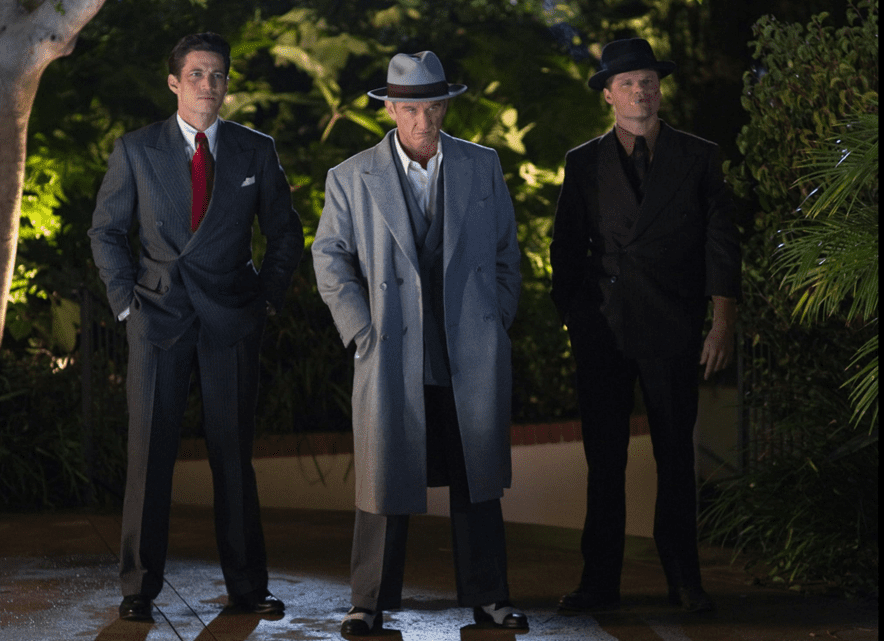
Mickey Cohen’s Story on the Big Screen
Mickey Cohen has been a popular subject in films. In the 1991 movie “Bugsy,” he was played by Harvey Keitel. The 1997 film “L.A. Confidential” also featured a character based on him.
Paul Lieberman’s book “Gangster Squad” tells the secret history of a covert LAPD unit. The 2013 film adaptation, “Gangster Squad,” transported viewers back to 1949 Los Angeles. Sean Penn played the role of mob king Mickey Cohen, who was making a fortune from drugs, weapons, and prostitution. He operated with impunity, protected by his enforcers and a network of corrupt police officers and politicians under his control.
“Gangster Squad” is a gripping retelling of the LAPD’s efforts to reclaim the city. The movie follows a small, secret group of police outsiders led by Sergeants John O’Mara and Jerry Wooters as they go up against Cohen and his criminal empire.