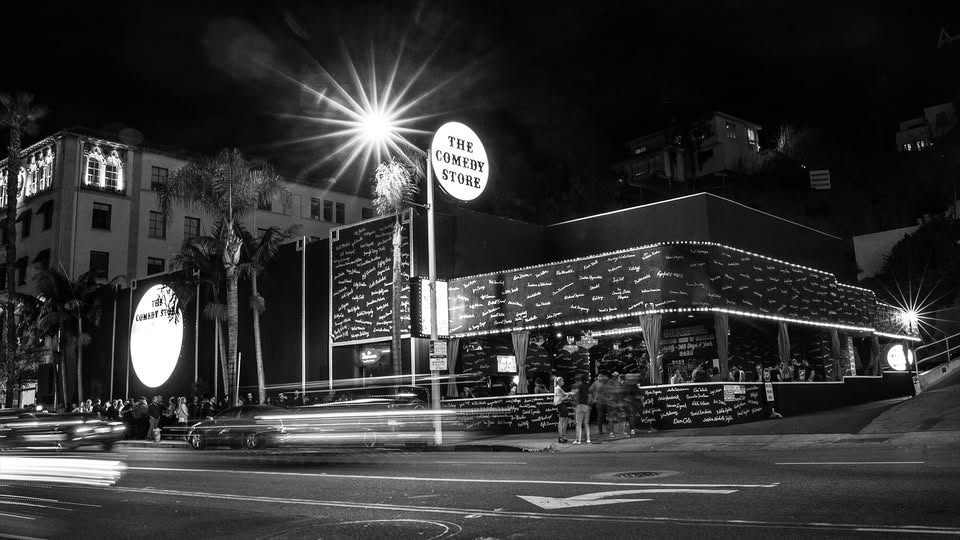

In the heart of Hollywood, one legendary venue stands alone as the undisputed Mecca of Comedy: The Comedy Store. It’s far more than just a stand-up spot; it’s where comedic icons are forged. Think of the titans who graced its stage—Richard Pryor, Robin Williams, Joe Rogan, and Dave Chappelle—all launching their careers here. We’ll take a deep dive into the full story of The Comedy Store, tracing its path from its inception through to the stars it minted and the lore behind its famous stage. Discover how a modest Los Angeles club became a global beacon of artistic freedom and the ultimate destination for every stand-up comedian worldwide, as detailed by los-angeles.pro.
The Legend Begins: The Founding of The Comedy Store
The history of this celebrated comedy landmark kicked off on April 7, 1972, right on the iconic Sunset Strip in West Hollywood. The founders were comedian Sammy Shore, his wife Mitzi Shore, and comedy writer Rudy DeLuca.
The initial motivation was simple: Sammy needed a dedicated space to refine his act. While he could manage on tour, he craved a permanent training ground in Los Angeles. Interestingly, Sammy Shore spent a considerable amount of time earlier in his career as Elvis Presley’s opening act.
The Comedy Store earned distinction as the first nightclub to exclusively showcase stand-up comedians. With Sammy frequently performing away from Los Angeles, Mitzi stepped up, assuming the full responsibilities of ownership. She became the gatekeeper, selecting and scheduling the talent. Although some sources credit Sammy, it was Mitzi who reportedly coined the name, The Comedy Store, and the venue rapidly exploded in popularity.
The Hall of Fame: Stand-Up Giants at The Comedy Store
Among the early performers were Sammy and Rudy’s famous comedian colleagues:
- Redd Foxx (born John Elroy Sanford). An American stand-up and actor, he was famously known as the “King of the Party Records.” His iconic role was Fred Sanford in the TV series Sanford and Son, and he also starred in The Redd Foxx Show.
- Tim Conway (full name Thomas Daniel Conway). An actor, comedian, screenwriter, and director. He achieved widespread acclaim primarily through the comedy sketch series The Carol Burnett Show, where he created two beloved recurring characters: Mr. Tudball and The Oldest Man.
- Buddy Hackett (born Leonard Hackett), a comedian and actor. He gained recognition for his strong New York accent, slightly crude material, and stout appearance. His memorable film roles include Marcellus Washburn in The Music Man (1962), Benji Benjamin in It’s a Mad, Mad, Mad, Mad World (1963), Tennessee Steinmetz in The Love Bug (1968), and voicing Scuttle in The Little Mermaid (1989).
- Jonathan Winters (full name Jonathan Harshman Winters III). He launched his career as a stand-up comic before moving into film and television acting. Winters accumulated many accolades, including two Grammy Awards, a Primetime Emmy Award, and a star on the Hollywood Walk of Fame in 1960.
Richard Pryor deserves special mention; he was a nightly fixture at the club, frequently using The Comedy Store stage to hone the material for his seminal album, Live on the Sunset Strip.
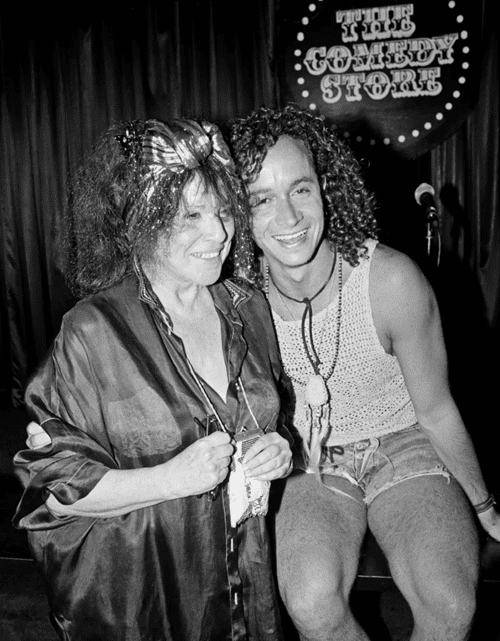
Comedians treated the venue as a workshop to fine-tune new sets or simply a place to relax with peers before embarking on tours across the nation or the world. For aspiring comedy stars, this was often the place they began their careers at The Comedy Store. Mitzi’s influence on the club’s success was extraordinary; she possessed a rare ability to spot raw talent, understood the necessity of cultivating it, and was sensitive to the needs of creative artists. She famously insisted that the room’s walls be painted black to ensure the audience’s full focus remained squarely on the performers.
The guiding principle Mitzi established continues to define the club. She viewed it as a dedicated space for creative minds advancing the unique artistic form of stand-up comedy, not just a business. It fosters a supportive, family-like environment for developing craft and mentoring new generations of comics.
The Original Stage
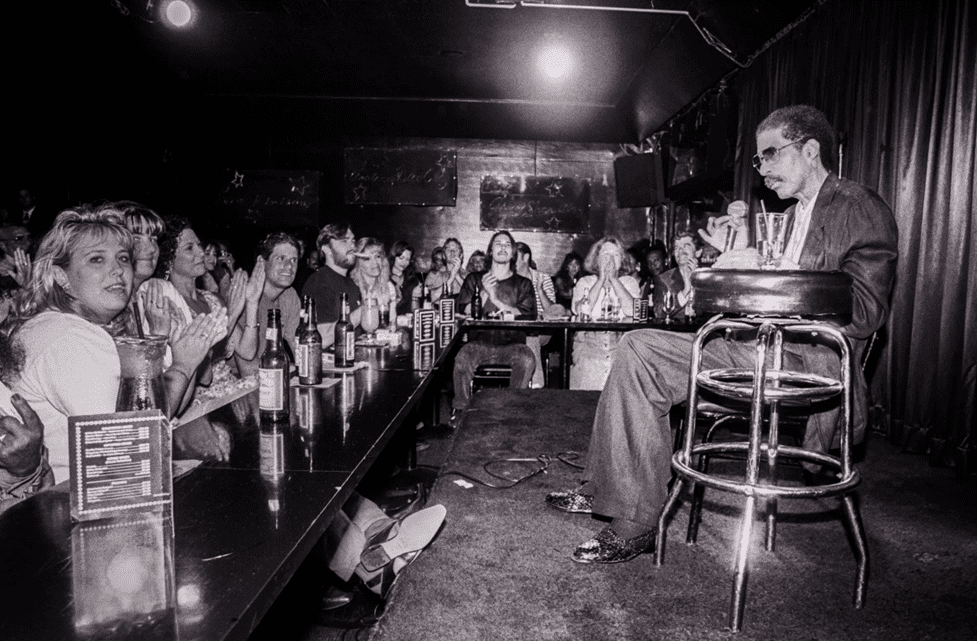
The Original Room was initially the club’s sole stage, as parts of the building were leased to other businesses. In July 1976, Mitzi successfully purchased the entire property. The Comedy Store’s popularity was explosive. This success spurred expansion, leading to new locations in Westwood (1974), Pacific Beach (1976), La Jolla (1977), and the main showroom at the Dunes Hotel in Las Vegas (1984).
By 1976, the club had cemented its reputation as the “Mecca of Comedy.” Hundreds, even thousands, of comics vied to be chosen as one of Mitzi’s coveted contenders. They received the chance to develop, perform, and receive guidance. It was the definitive way to make a mark and launch a professional comedy career.
Only comics with palpable charisma, vibrancy, and a degree of existing star power could hope to join this exclusive list of contenders. Over time, those selected by Mitzi became known as the “Paid Regulars.” Their names were proudly mounted on the exterior walls of The Comedy Store building on Sunset, a tradition that endures today. Earning this status was a challenging feat but carried immense respect. Having well-polished jokes was insufficient; one had to possess a truly distinct presence. Not everyone made the cut.
Richard Pryor exemplifies this perfectly, embodying the core idea of fostering authentic comedic voices. His material resonated profoundly with audiences.
When studying the club’s legacy, one must also recall the stand-up revolution, specifically the comedians’ strike of 1979.
The Comedy Store’s Contemporary Era
On April 11, 2018, Mitzi Shore passed away. She was not just the club’s owner but the revered “Godmother” of stand-up globally. The club’s website featured an announcement noting her passing. It stated that Mitzi was a visionary businesswoman who operated ahead of her time and consistently championed the art of stand-up comedy. To honor her legacy, the club encouraged fans to donate to the Comedy Store Comedians Assistance Fund.
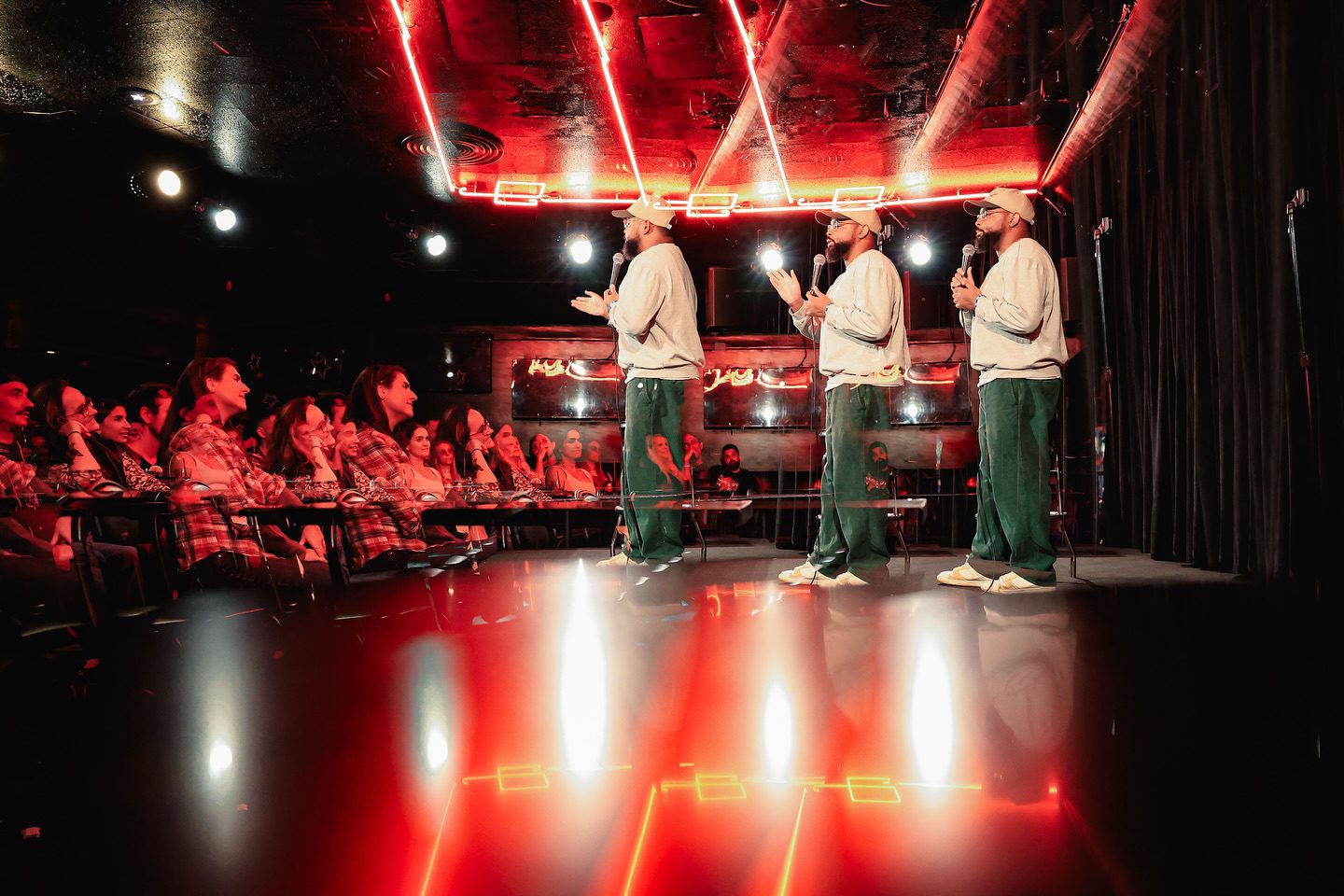
Today, the club continues its mission, treating comedy as a profound art form. Its stage provides a crucial platform for unique, multicultural voices that span various generations. The stand-up acts delivered here compel audiences to laugh while simultaneously provoking thought on significant issues. The current roster of comedic titans includes:
- Dave Chappelle – consistently ranked as one of the most influential and intellectually piercing contemporary comedians.
- Louis C.K. – celebrated for his mastery of autobiographical and intensely self-deprecating humor.
- Ali Wong. She is a powerful voice who successfully mainstreamed feminist and maternal comedy worldwide.
- Bill Burr, who is known for his signature aggressive, yet meticulously thoughtful style.
- Theo Von and Marc Maron. These comedians are renowned for effectively merging stand-up performance with popular podcasting, frequently using the club’s stage to test new material.
- Bobby Lee, Jeff Ross, and Iliza Shlesinger – they represent a wide spectrum of styles: from ethnic comedy and the “Roastmaster General” to powerful female-led stand-up.
Thanks to these artists and countless others, The Comedy Store remains perpetually vibrant and relevant. The next chapter in comedy history is being written on its stages every night.
To celebrate The Comedy Store’s 20th Anniversary, the performers included: Yakov Smirnoff, Jimmie Walker, Pauly Shore, Jim Carrey, Richard Belzer, Bob Saget, Tamayo Otsuki, and Louie Anderson.
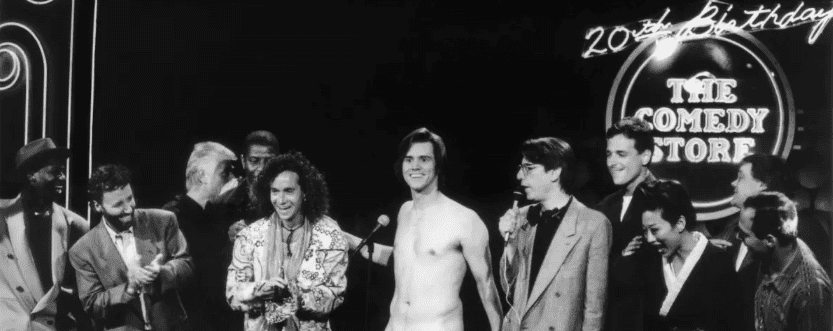
Los Angeles’ Enduring Comedy Landmark
If you seek a place guaranteed to deliver heartfelt laughter and an unforgettable night out, a visit to The Comedy Store is essential. The establishment operates seven days a week, daily from 6:30 PM to 2:00 AM. The comedy club continues to be the ultimate symbol of live performance. The founding mission established by Mitzi Shore remains steadfast: to provide a critical stage for comedians’ performances.
Despite the constant evolution of the entertainment industry, The Comedy Store consistently defines the standard. Any given night here can become historical, as you never know which current legend or future superstar will step up next. This venue stands as an eternal legend of stand-up in Los Angeles and confirms a timeless truth—authentic comedy will always find its home.