

The Kingdom Day Parade is an annual event in Los Angeles dedicated to the memory of Dr. Martin Luther King Jr. and his struggle for civil rights and social justice. The parade traditionally takes place in January, celebrating Martin Luther King Jr. Day—a U.S. national holiday observed on the third Monday of the month. It is one of the largest parades honoring King in the United States and a vibrant event that unites various Los Angeles communities. This day helps to draw attention to social problems and important societal challenges. Also, find out how veterans are honored in Los Angeles. Read more at los-angeles.pro.
History of the Parade
The Kingdom Day Parade first took place in 1985, two years after Martin Luther King Jr. Day was officially recognized as a federal holiday. The parade was initiated by activist and founder of South Los Angeles’ Congress of Racial Equality (CORE), Larry Grant. The event’s goal was not only to honor King’s legacy but also to promote unity and equality among different racial and social groups. The parade quickly gained popularity, becoming not only a symbol of the struggle for civil rights but also an opportunity for various communities in the city to unite and discuss cultural diversity. Each year, the event gathers tens of thousands of spectators and millions of television viewers through broadcasts.
Over the years, the parade has undergone significant changes. From a small local event, it has transformed into a large-scale event attracting thousands of participants and spectators. In addition to the traditional march, it now includes performances by celebrities, local leaders, and community activists. For example, in 2025, the Grand Marshal was civil rights attorney Ben Crump. Although the parade is usually held in January, it has occasionally been rescheduled. In 2025, out of respect for the families affected by the wildfires, the 40th annual parade was moved to February. The Kingdom Day Parade remains a crucial event that unites various Los Angeles communities to honor Dr. King’s legacy and continue his struggle for equality and justice.
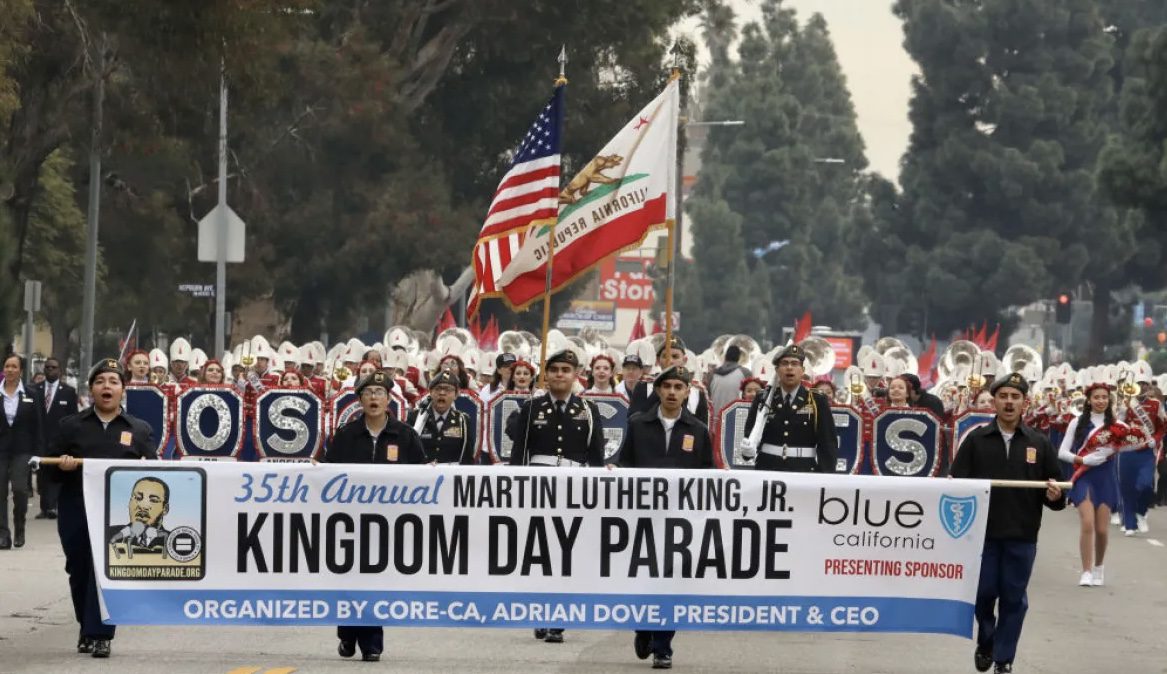
Each year, the Kingdom Day Parade features a specific theme related to the fight for civil rights, social justice, and equality. For instance, popular themes have included: “Keeping the Dream Alive,” “The Struggle Continues,” and “Equal Rights for All.” These themes reflect contemporary social issues such as racial discrimination, economic inequality, and police misconduct. The parade’s significance has grown even more against the backdrop of social justice movements, such as Black Lives Matter. Many participants use the parade platform to express their position and draw attention to current issues.
The parade also has an important charitable aspect. During the event, funds are raised for local organizations focused on youth education, aid to the underprivileged, and support for families affected by violence. There are also numerous information booths where volunteers discuss human rights, social support opportunities, and educational programs.
Parade Participants
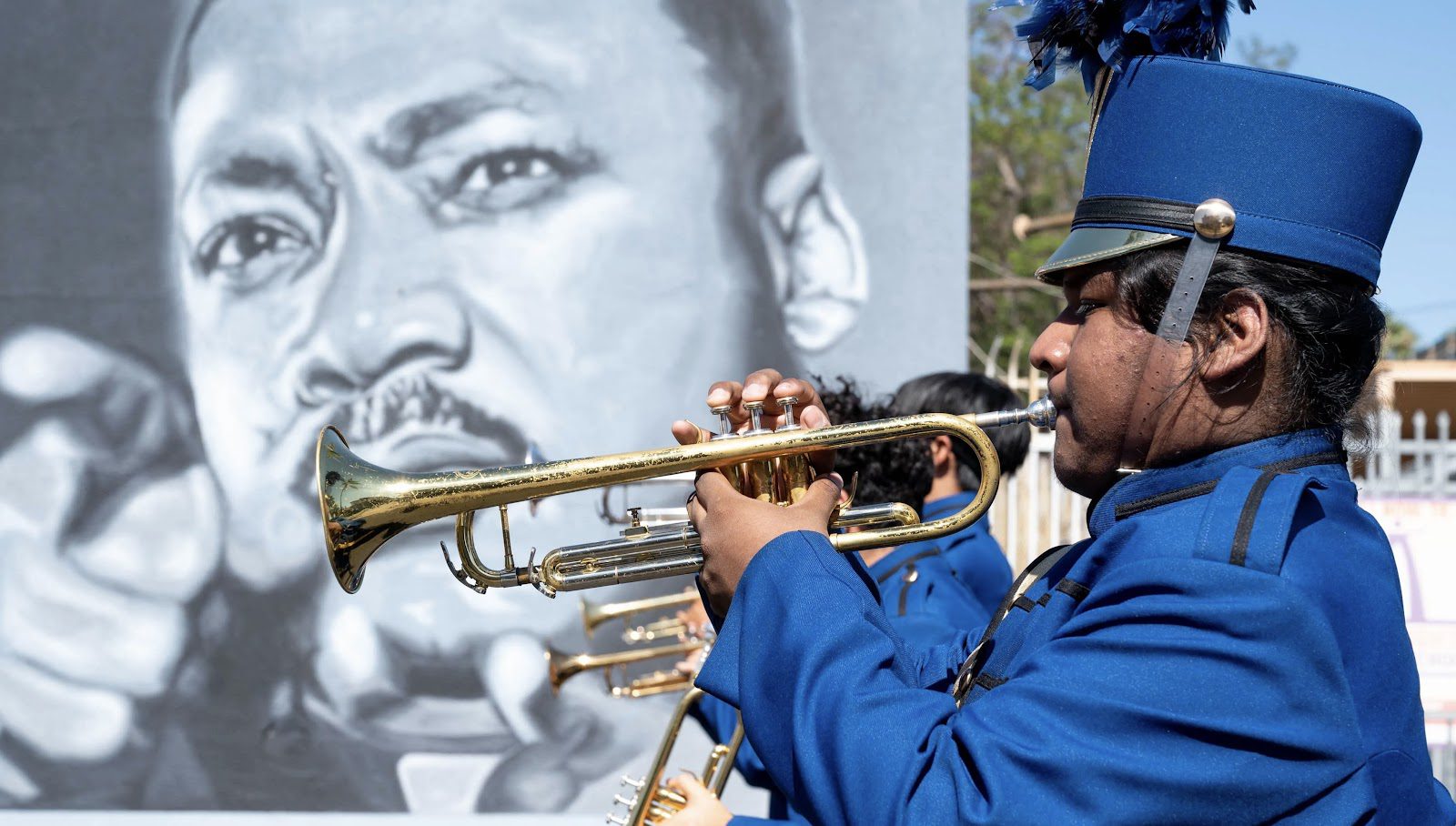
The Kingdom Day Parade is famous for its diversity of participants. The parade includes school marching bands, dance troupes, activists, representatives of church communities, and political figures. Spectators can see colorful floats adorned with civil rights symbols and images of Martin Luther King Jr., cars carrying honored guests, and performances by musicians.
A distinctive feature of the parade is the involvement of youth and educational institutions. Students from Los Angeles schools actively participate in various activities: playing in orchestras, performing thematic songs, and reading excerpts from King’s speeches, notably the famous “I Have a Dream” address. This is not just entertainment but an opportunity to pass on the important values of the struggle for equality and justice to the younger generation. Some spectators reserve their spot along the street with sleeping bags the night before, as the parade has become a vital part of Los Angeles life and a unique tradition.
At the Kingdom Day Parade, you can often see prominent community leaders, celebrities, and politicians. They have included:
- Maxine Waters — a congresswoman known for her active stance on African American rights.
- Kamala Harris — even before serving as the Vice President of the United States, she participated in the parade as a Senator from California.
- Snoop Dogg and other celebrities who have repeatedly supported the parade with their presence and calls for unity.
The Kingdom Day Parade is more than just a colorful march through the streets of Los Angeles; it is a symbol of hope, unity, and the fight for justice. This celebration commemorates Martin Luther King’s legacy and shows that his dream of equal rights for all lives on in the 21st century. The participation of thousands of people of various ages, races, and faiths underscores the importance of continuing the struggle for equality and mutual respect in modern society.
Parade Details
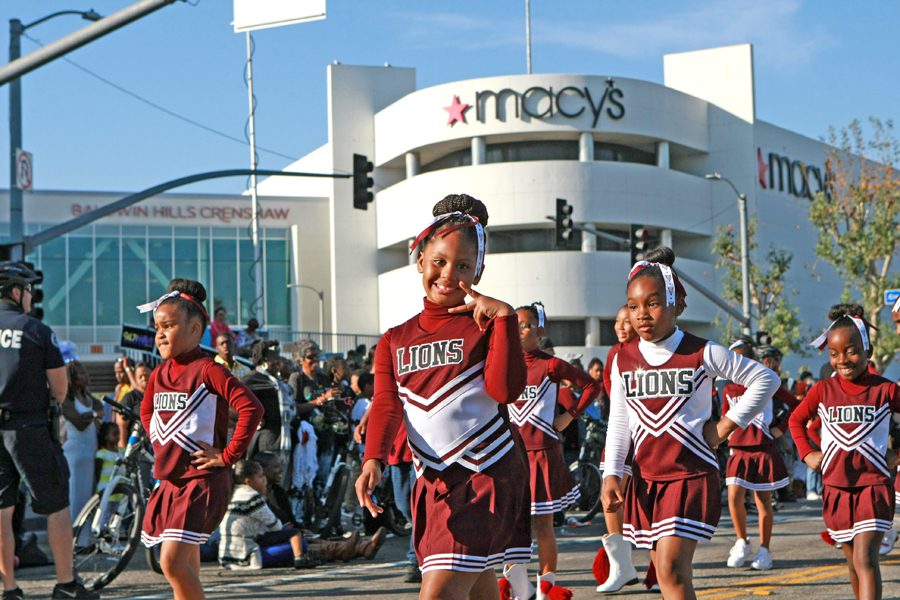
The parade traditionally takes place along Martin Luther King Jr. and Crenshaw Boulevards in Los Angeles. This location is symbolic, as it is a historical center of the city’s African American community. The route covers approximately 3 miles. The parade typically concludes in the parking lot at the center of Leimert Park—another significant location for the local community.
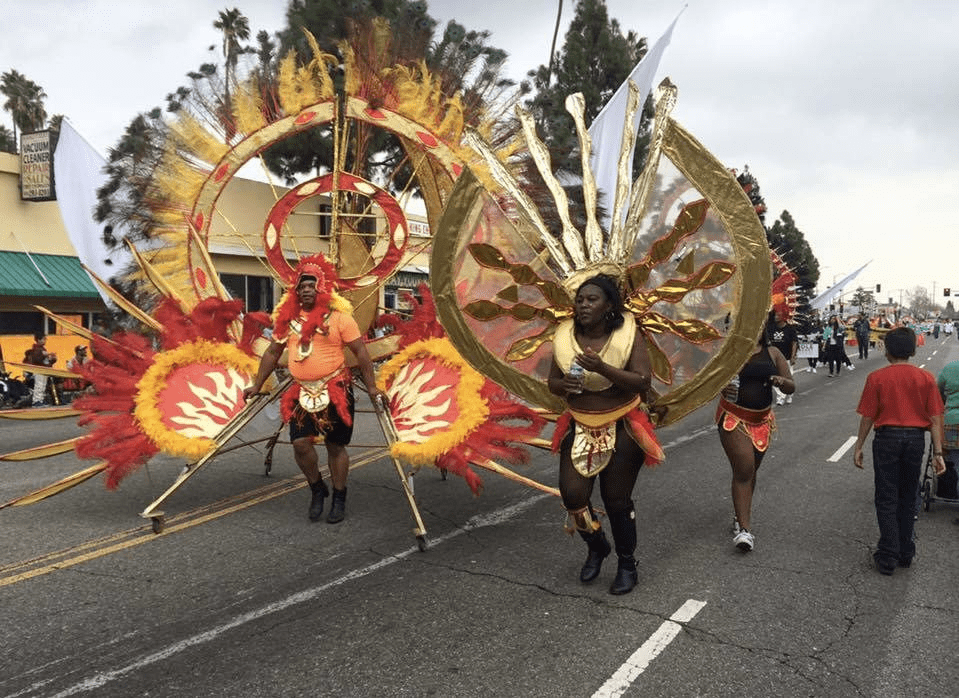
A key feature of the Kingdom Day Parade is the vibrant floats, decorated with images of King, quotes from his speeches, and symbols of equality. Many floats are created by local schools, community organizations, and churches. March participants wear thematic costumes, often featuring elements of traditional attire and African American culture. The colorful costumes and traditional melodies create a unique atmosphere of unity, highlighting the importance of solidarity in the fight for social justice. Before and after the march, there are speeches by community activists, politicians, and leaders. They discuss the significance of King’s legacy, current issues of racial equality, and human rights. Important symbols of the parade include posters with King’s quotes, civil rights movement flags, and posters with current slogans like Black Lives Matter or Justice for All. These slogans emphasize the ongoing struggle for equality and justice.
In addition to marching bands, the parade features Gospel, Jazz, and R&B music. After the march concludes, concerts are often held featuring local and guest performers. Music is an integral part of the celebration, creating an atmosphere of unity and inspiration. Police patrols and volunteers are involved to ensure order during the event. Organizers pay special attention to the safety of participants, as well as the accessibility of the event for people with disabilities.
Broadcast
This parade is traditionally broadcast live, allowing viewers to enjoy the event even from a distance. Specifically, ABC7 Los Angeles serves as a media partner and provides live coverage of the parade.
The parade attracts thousands of participants and spectators. For example, in 2025, hundreds of community members gathered for the 40th annual Kingdom Day Parade. This demonstrates the event’s popularity and importance to the local community. For those unable to attend in person, recordings of the parade are available. Videos of the events can be viewed on the official Kingdom Day Parade website.